 PO Box 26214, Baltimore, MD 21210
 855-721-MDDC
 kberrier@mddcpress.com
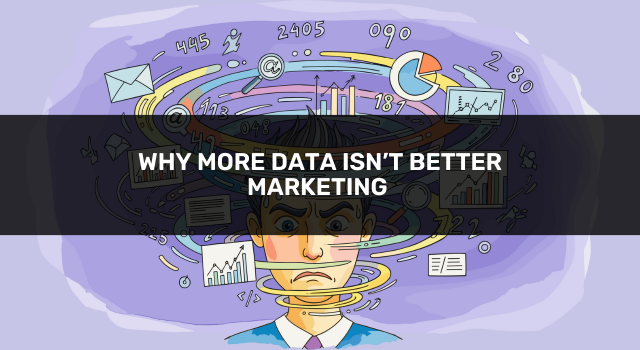
Marketing has never had more data than it does right now.
Dashboards are packed with metrics. Reports grow longer every month. Every platform promises deeper insights and more precision.
And yet, decision-making feels harder than ever.
More data does not automatically lead to better marketing. In many cases, it slows it down.
The problem is not access to information. The problem is relevance.
When everything is measured, nothing stands out. When every metric is tracked, prioritization disappears. Teams spend more time analyzing performance than improving it.
Data without direction creates noise. Data without context creates confusion. Data without action creates frustration.
The most common mistake marketers make is assuming that more information equals more clarity. It rarely does. In fact, too much data often hides the signal that actually matters.
Good marketing decisions are not made because someone had the most data. They are made because someone asked the right questions before opening a report.
What is the goal of this campaign? What behavior are we trying to influence? What does success actually look like?
Without those answers, data becomes a distraction.
Another issue is false precision. Detailed metrics can create the illusion of control. It feels productive to slice performance into smaller and smaller pieces. But precision without purpose does not improve results.
Knowing that click-through rate increased by a fraction of a percent does not matter if the campaign is not driving meaningful outcomes. Knowing demographic breakdowns does not matter if the message is not resonating.
Data should inform decisions, not replace them.
There is also a human cost to data overload. Teams spend hours building reports that no one acts on. Meetings become debates about which metric matters most instead of discussions about what to do next.
When everything is important, nothing is prioritized.
The strongest marketers simplify. They identify a small number of metrics that directly connect to the goal. They track trends instead of obsessing over daily fluctuations. They focus on movement, not noise.
More data often encourages hesitation. People wait for more confirmation. More validation. More certainty. Meanwhile, opportunities pass.
Marketing does not require perfect information. It requires timely action.
The best insights usually come from combining data with experience. Numbers show what happened. Humans decide why it happened and what to do about it.
That balance matters.
Better marketing does not come from knowing everything. It comes from knowing what matters most.
Clarity beats volume. Focus beats excess. Insight beats information.
The goal is not to collect more data. The goal is to make better decisions faster.