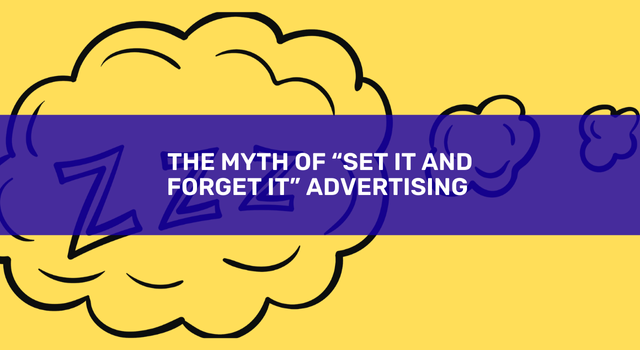
The Myth of “Set It and Forget It” Advertising
“Set it and forget it” might be the most misleading promise in modern advertising.
It sounds efficient. It sounds scalable. It sounds like technology finally figured out how to make marketing easy.
“Set it and forget it” might be the most misleading promise in modern advertising.
It sounds efficient. It sounds scalable. It sounds like technology finally figured out how to make marketing easy.
Every business works with vendors.
That’s not a weakness—it’s the reality of modern business.
Marketing agencies rely on platforms, publishers, ad tech, software providers, printers, freelancers, consultants, and distribution partners. Retailers rely on suppliers and logistics companies. Service businesses rely on tools, contractors, and specialists. No organization operates in a vacuum.
There is a simple reality in modern marketing. Attention is the currency that decides whether your message connects or disappears. It is the difference between campaigns that move people to act and campaigns that blend into the scroll.
You cannot buy attention the way you used to. Big budgets and big impressions once guaranteed visibility. Today they only guarantee a chance. People skip ads without looking at them. They scroll past posts within seconds. Your audience is moving fast, and if you are not creating something that stops them for even a moment, the spend does not matter.
If you’ve spent any time managing social media accounts, you’ve probably wrestled with the hashtag debate. Should you use three hashtags or thirty? Does more equal better reach? Is there a magic list that guarantees virality? And, most important, does any of this actually move the needle for your brand?
If you have ever pitched or invested in top-of-funnel (TOF) marketing such as brand awareness, content exposure, or audience-building tactics, you have probably heard the same question:
“But how do we know it is working?”
Why the Future of Growth Is Evolving from a Funnel to a Loop
For years, the marketing funnel has guided how businesses attract, nurture, and convert customers. It’s been the framework behind everything from inbound content to performance ads. And it still works—just differently than it used to.
Every marketer knows the adrenaline rush of Q4. The mad dash to hit revenue goals, the surge in CPMs, the constant tweaking of campaigns to squeeze every drop out of the holiday rush. It’s a blur of urgency and opportunity—a sprint that often ends with exhausted teams and inflated ad costs.
You’ve trusted your AI with your passwords, your calendar, and your personality—but if you’re letting it browse the web, you might be giving it a little too much freedom. The moment your AI gets access to websites, buttons, and forms, it’s basically out there wandering the digital streets alone. And just like an intern with too much initiative, it can get talked into some bad ideas fast.
Artificial Intelligence (AI) is no longer just a Silicon Valley buzzword—it’s the most important tool shaping how small businesses and local media companies work, sell, and grow. But here’s the problem: keeping up with AI often feels like you need a PhD in computer science or eight spare hours to watch a course.
Most people think using AI is as simple as typing a question and waiting for an answer. That’s true—AI will give you something back. But if you really want to squeeze the highest quality respones out of AI, the difference really comes down to one thing: prompting.